Ultimate Tour Divide Transportation Guide: Passports, Airports, And More

Welcome to the Tour Divide Transportation Guide, your comprehensive resource for planning travel to the start line, including airports, shuttles, and tips. This Tour Divide Transportation Guide provides riders with everything they need for a seamless journey to and from the route. Navigating the travel logistics of the Tour Divide can be as challenging as the ride itself, especially with the added complexity of crossing international borders and the remoteness of Antelope Wells. Proper planning is crucial to ensure a smooth headache free journey. This guide is designed to simplify your transportation arrangements, helping you focus on the adventure ahead rather than the details of getting there and back.

Let us help you focus on the ride, not the ride to the ride.

As an affiliate partner, One of Seven Project earns a commission for purchases made through any product, brand logo links, or banner ads on this page. Thanks for your support!

  • SPOT llc ad

Save big and support The Project at the same time! Check out our Affiliate Deals page for exclusive offers on top brands. Every purchase fuels our mission to provide you with the best guides and resources for your adventures. Bookmark it now and shop smarter—deals update regularly!

TRAVEL TO AND FROM

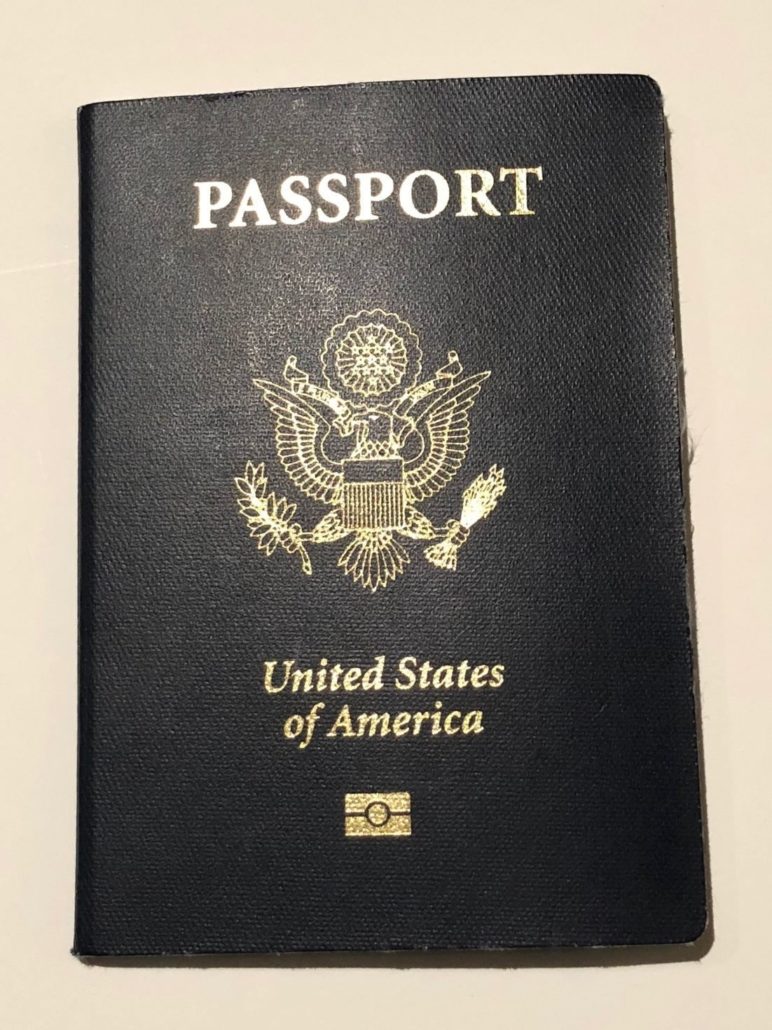
Getting to and from the Tour Divide varies depending on where you’re coming from. This section provides a simplified overview of the basics for entering and exiting the US and Canada for the race.

For detailed information on passports, visas, VWP, eTA, ESTA, customs regulations, and border crossings, refer to our full travel guides:

Bikepacking in the USA & Canada – For non-US riders traveling to North America
International Bikepacking – For US riders traveling abroad

The rest of this guide focuses on transportation logistics, including shuttles, buses, airports, lodging, and more to help you plan your trip.

Entry & Exit Overview

US Citizens

  • Entering Canada: A valid passport is required to fly or drive into Canada.
  • Returning to the US: A valid passport book or card is required.
  • ArriveCAN App: No longer required but still available for convenience.

Non-US Citizens

  • Entering Canada: A passport is required. Most travelers also need an Electronic Travel Authorization (eTA) to fly into Canada.
  • Entering the US:
    • Visa Waiver Program (VWP) travelers: Must apply for an Electronic System for Travel Authorization (ESTA) before arrival.
    • Non-VWP travelers: Must apply for a B-1 (Business) or B-2 (Tourism) Visain advance.
    • Canadian citizens only need a valid passport to enter the US.

What the Full Guides Cover

Items covered:

  • Visas: Visa Waiver Program (VWP), ESTA & B-1/B-2 Visas for US entry
  • eTA: Electronic Travel Authorization (eTA) for Canada
  • Passports: Requirements & customs regulations
  • Health: Precautions & vaccinations
  • Safety: Travel insurance & emergency planning
  • Logistics: Border crossing tips & potential travel delays
  • Bike: Shipping & flying with your bike
  • Travel Tips: gear/resupply, pre/post trip considerations, and more

For a full breakdown of travel requirements, visas, and border policies, visit our dedicated guides below.

Non-US Riders: Bikepacking in the USA & Canada

US Riders: International Bikepacking

With today’s ever changing political climate be sure to visit the official websites for your own country and those your going to as information, rules, and restrictions could change daily.

TOUR DIVIDE PLANNING AIDS

Welcome to The Project’s Tour Divide Planning Aids, designed to bridge the gap left by the lack of high-quality planning tools within bikepacking. As a Triple Crown thru-hiker, I’m accustomed to comprehensive planning resources, and I noticed that bikepacking needed similar quality tools. That’s why I developed these resources to make your Tour Divide adventure as smooth and well-prepared as possible.
Our planning aids include four distinct styles to help you plan your ride:

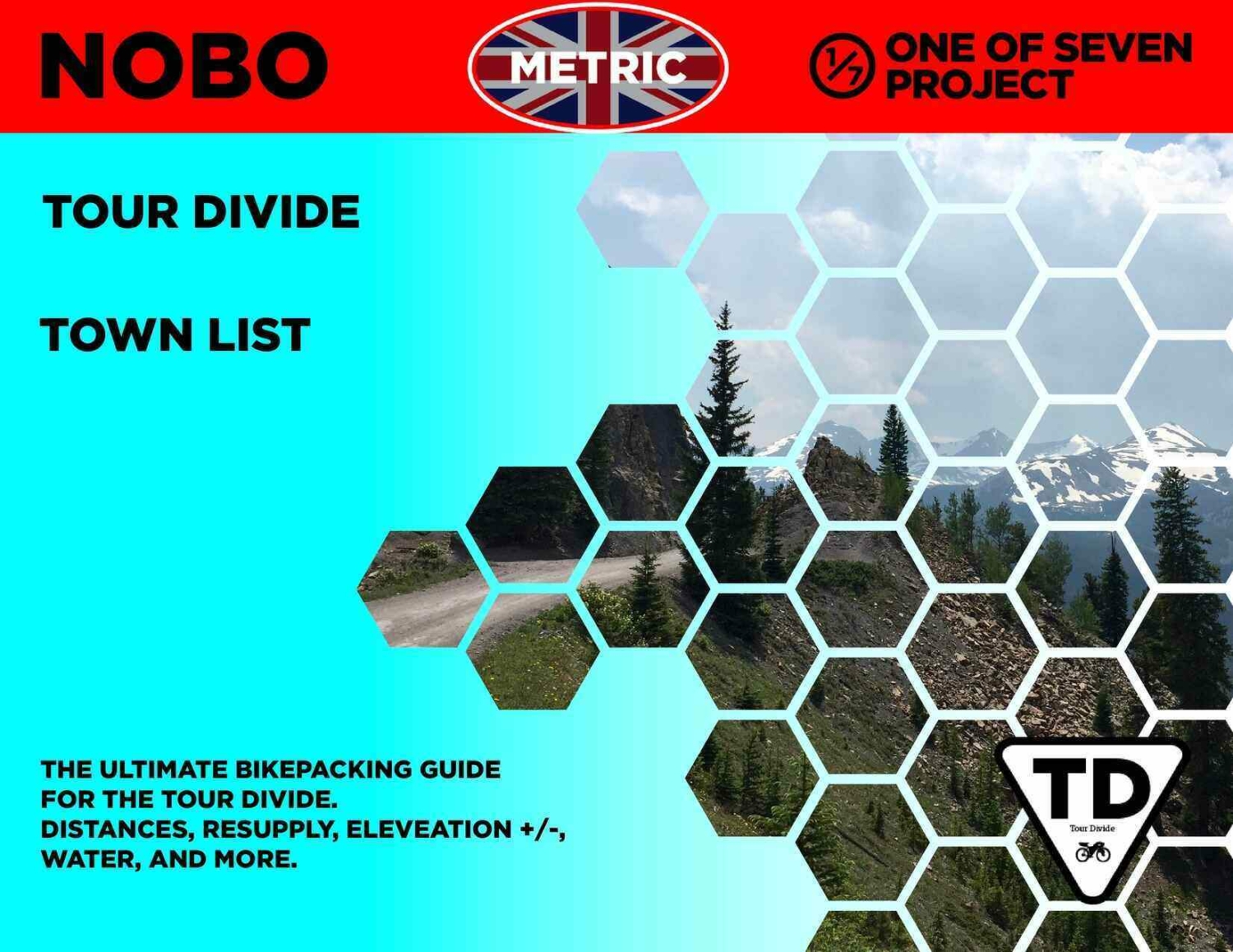
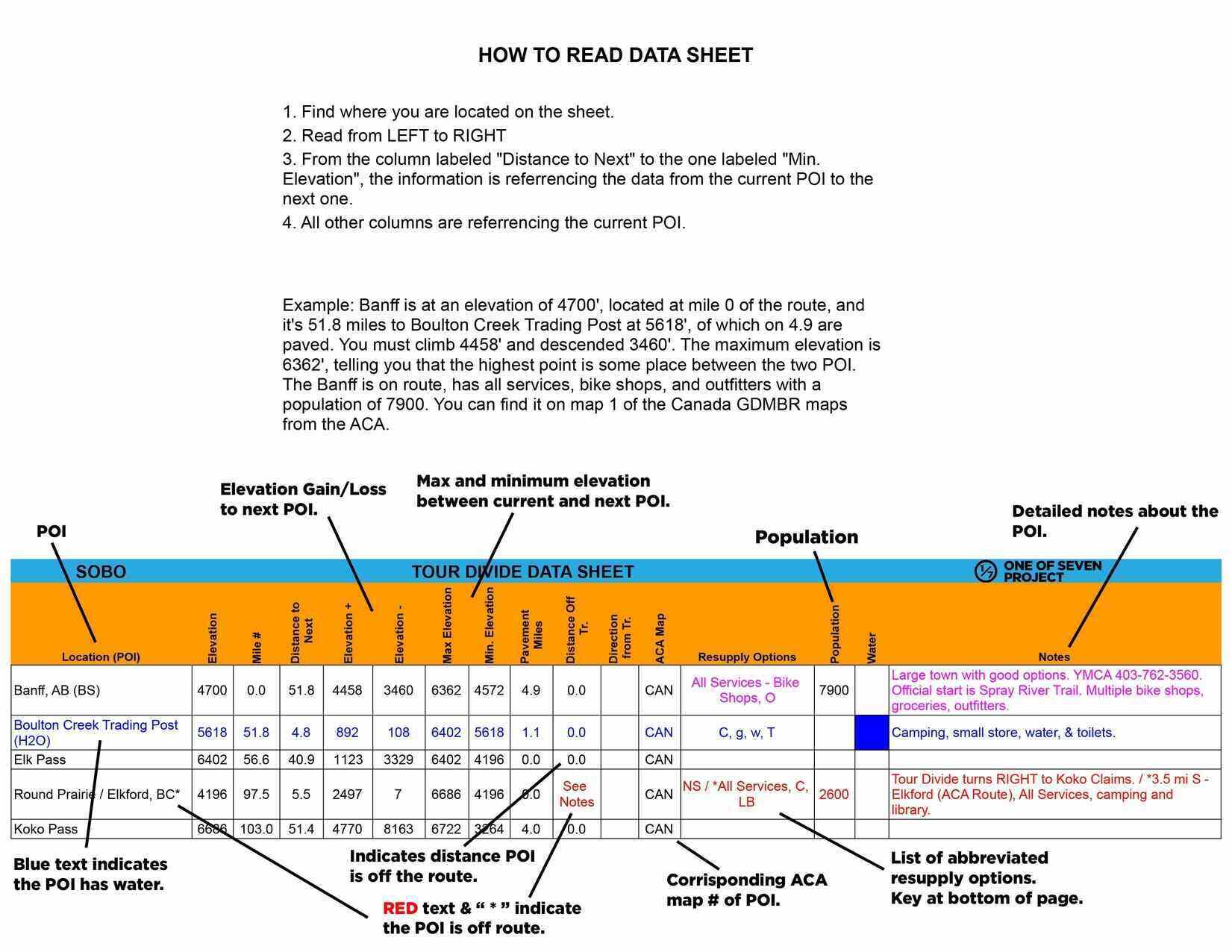
  • The Data Sheet: Offers the most detailed information, including distance, elevation +/-, resupply options, notes and more for key POI.
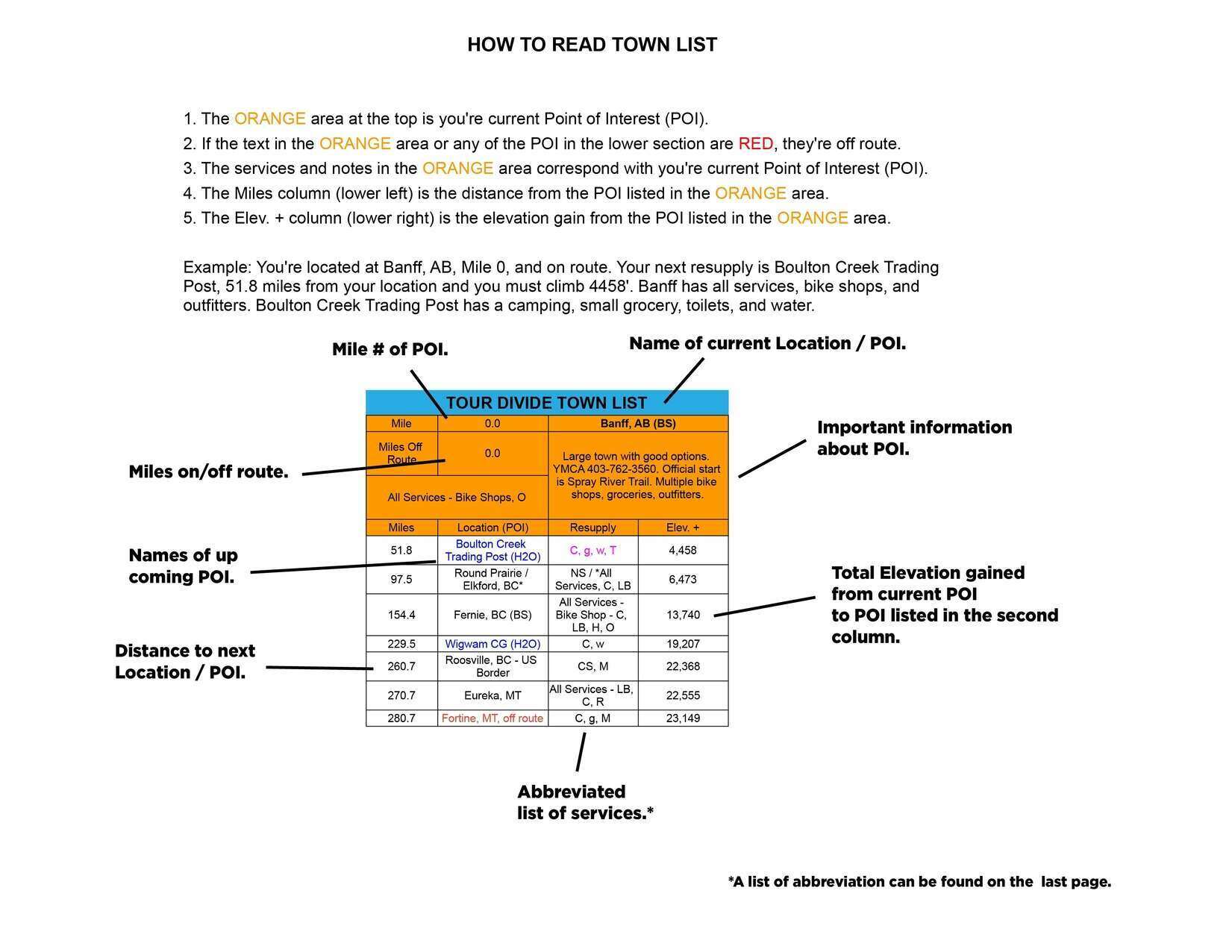
  • Town List: provides cumulative distances between POI, and does the math so you don’t have to.
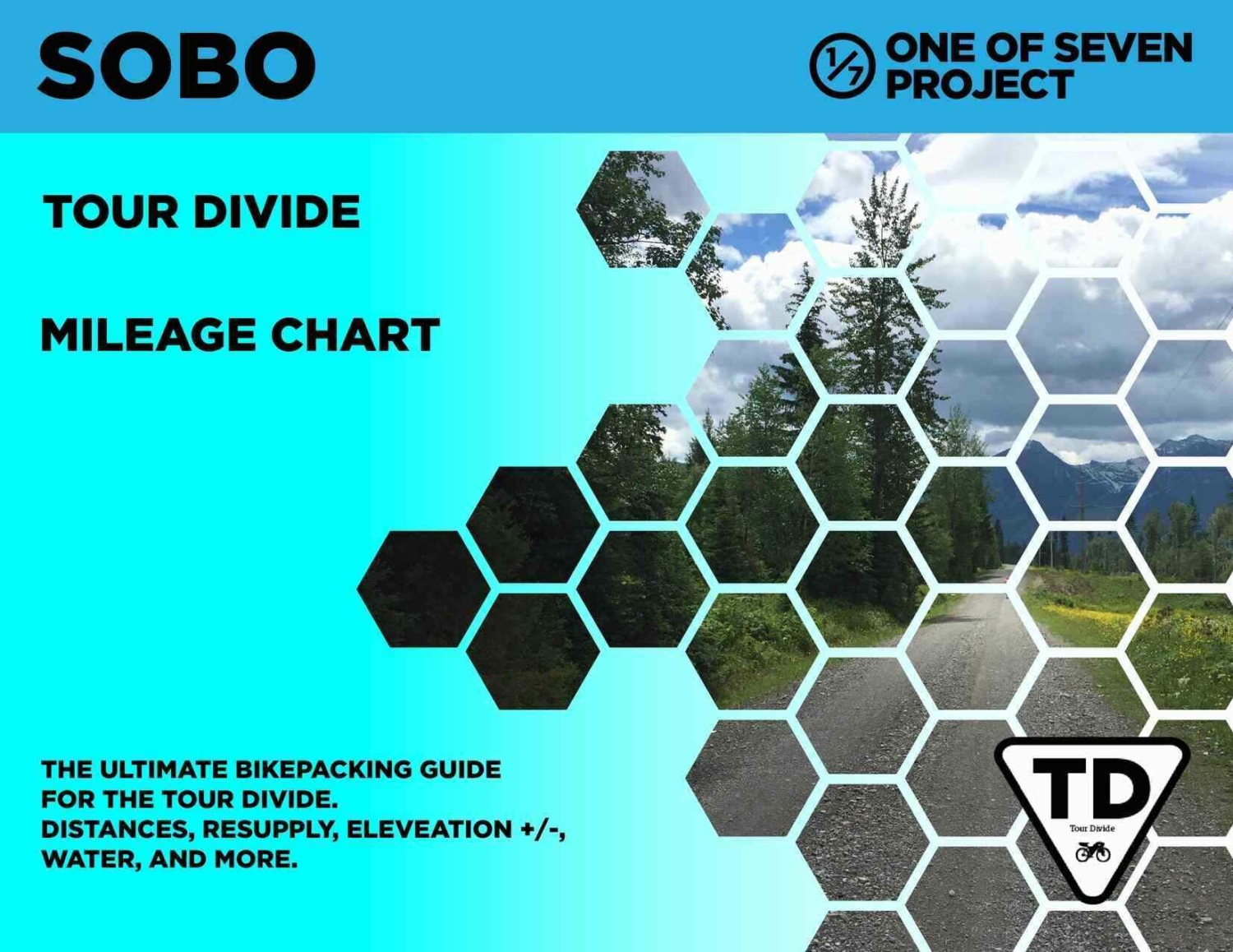
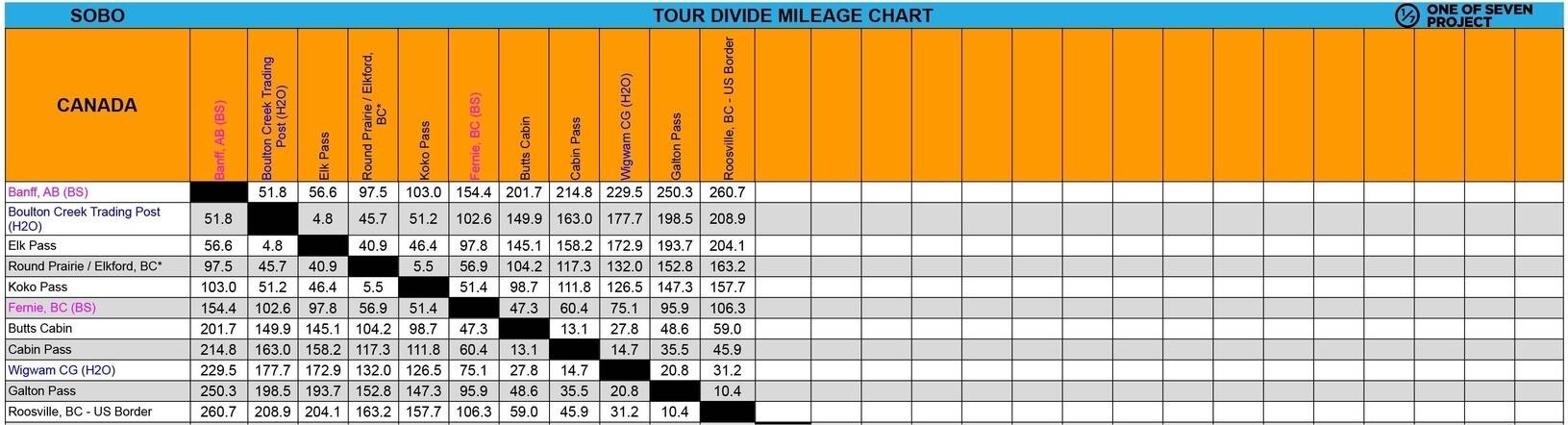
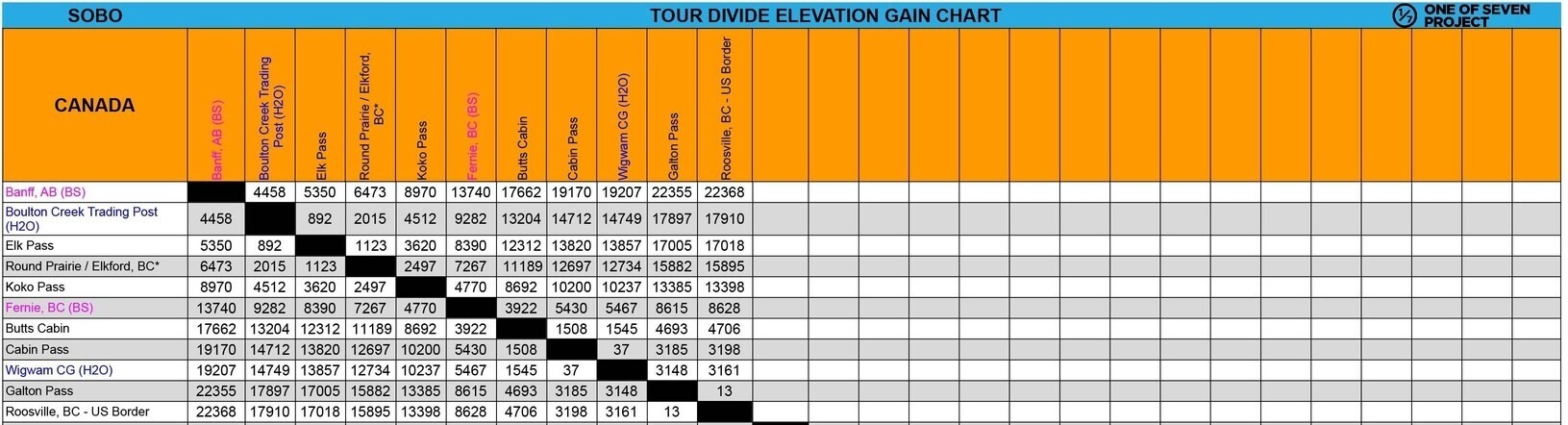
  • Mileage Chart and Elevation Gain Chart: are simple graphs showing cumulative mileage and elevation gain between POI.

Additional Resources

  • Why Use Our Planning Aids: Check out the “Why Choose Our Planning Aids” tab below for an in-depth explanation of their value, including how they simplify preparation, save time, and provide clarity bikepacking adventures and racing.
  • Tour Divide Maps: Explore our companion Ride with GPS maps tab below, to visualize the route, identify POIs, and download files for offline navigation.

Explore our offerings to find the perfect combination for your needs and get ready to conquer the Tour Divide! Don’t forget to checkout our online Tour Divide Resources as well.

BUNDLES

Small Bundles:

Big Bundles:

The Small Bundle includes our two most popular planning aids, giving bikepackers essential route data in a streamlined format. With key logistics, cumulative mileage, and resupply details at your fingertips, this bundle simplifies planning and keeps you focused on the ride.

  • Data Sheet – The most comprehensive planning tool, packed with mileage, elevation gain/loss, resupply points, and key logistics.
  • Town List – Cumulative mileage and elevation gain between POIs, helping track progress and plan stops efficiently.

The Big Bundle provides the most complete set of planning tools, ensuring you have everything needed to plan effectively and ride with confidence.

  • Data Sheet – Detailed mileage, elevation, and resupply information for comprehensive planning.
  • Town List – Cumulative distance and elevation tracking for easy route management.
  • Mileage Chart – Quick-reference breakdown of distances between key points.
  • Elevation Gain Chart – Clear elevation changes to help anticipate climbs and descents.

Available in both SOBO and NOBO versions, as well as both US Standard and Metric units.

Small Bundle – $40.00  *You save $10 when you bundle!

Big Bundle – $60.00  *You save $20 when you bundle!

This website is awesome, very professionally done and has been a great resource.”

Craig, I wanted to let you know that your bikepacking guides are incredibly well done and useful.

DATA SHEETS / TOWN LISTS

Data Sheets:

Town Lists:

The Data Sheet is our most comprehensive planning tool, packed with detailed route data, including mileage, elevation gain/loss, resupply points, key logistics, and more to support every aspect of your ride. Designed to be the ultimate resupply tool, it ensures bikepackers have the critical information needed to plan their route efficiently and make informed decisions on the go.

The Town List provides cumulative distances and elevation gain between multiple POIs, helping bikepackers track progress and plan resupply stops with ease. By doing the math for you, it saves time and lets you focus on the ride.

Data Sheet ONLY available in SOBO version, as well as both US Standard and Metric units.

Town Lists are ONLY available as part of the Small or Big Bundle.

Data Sheet – $25

Town List (ONLY available as part of the Small or Big Bundle.)

This website is awesome, very professionally done and has been a great resource.”

Craig, I wanted to let you know that your bikepacking guides are incredibly well done and useful.

MILEAGE / ELEVATION GAIN CHARTS

Mileage Charts:

Elevation Gain Charts:

The Mileage Chart provides a quick-reference breakdown of distances between key points along the route, helping bikepackers plan resupply stops and daily targets efficiently.

  • Shows bike shops.
  • Works for both directions.
  • Key water sources.

The Elevation Gain Chart delivers a clear view of total elevation changes, allowing riders to anticipate climbs, descents, and overall route difficulty at a glance.

    • Shows bike shops.
    • Works for both directions.
    • Key water sources.

The Mileage and Elevation Gain Charts are ONLY available as part of the Big Bundle.

Mileage and Elevation Gain Carts are our available as part of the Big Bundle.

Big Bundle – $60.00  *You save $20 when you bundle!

This website is awesome, very professionally done and has been a great resource.”

Craig, I wanted to let you know that your bikepacking guides are incredibly well done and useful.

Why Use Our Planning Aids?

Our Tour Divide Planning Aids for bikepacking and hiking are trusted by experienced bikepackers, endurance riders, and hikers because they simplify preparation and provide clarity where it matters most. With our Tour Divide Planning Aids, you can:

  • Plan with Confidence: Know exactly what’s ahead, from water stops to elevation changes, whether you're on two wheels or exploring on foot.
  • Save Time: Get all the key route details in one organized place—no more piecing together scattered info, whether you're planning a ride or a hike.
  • Stay Focused on the Journey: With your prep done, you’ll spend less time worrying and more time enjoying the experience, whether you're riding or hiking.

What Are Planning Aids?

Our  Tour Divide Planning Aids are comprehensive resources designed to assist bikepackers in effectively planning and navigating their adventures. Whether you’re tackling challenging bikepacking routes, or exploring scenic trails, these aids deliver critical route data and information to simplify your preparation and keep you focused on your journey.

From mileage data to key resupply points and water sources, our Tour Divide Planning Aids provide the essential details to help you stay on track and fully experience the trail. We aim to support your success, no matter how you choose to explore the outdoors.

What You Get

When you choose our Tour Divide Planning Aids, you gain access to reliable and organized route-specific data, including:

  • Point-of-Interest (POI) Data:
    • Mileage markers, cumulative distances, and key stops along the route.
    • Locations for resupply points, water sources, bike shops, and other critical services.
  • Route Metrics:
    • Elevation gain/loss, max/min elevations, and pavement mileage.
    • Detailed charts to help you anticipate climbs, descents, and varying terrain.
  • Practical Notes for Riders:
    • Guidance for navigating remote areas, staying prepared for dry stretches, and hitting resupply points.
    • Finish targets and other planning details to set achievable goals for each ride.
  • Convenient Formats:
    • Delivered as easy-to-use PDF files, available in both SOBO (Southbound) and NOBO (Northbound) formats where applicable.
  • Free Updates Throughout the Year:
    • Planning Aids include the most current data available at the time of purchase and are valid through December 31 of that year. If new information becomes available, you’ll receive free updates via email to ensure you’re always using the latest data.

This website is awesome, very professionally done and has been a great resource.”

Craig, I wanted to let you know that your bikepacking guides are incredibly well done and useful.

Tour Divide Maps

Plan Smarter with the Tour Divide Maps and Planning Aids

The Tour Divide is one of the most challenging bikepacking routes in the world, stretching thousands of miles through remote terrain and breathtaking landscapes. Proper preparation is essential for success, and these interactive maps, based on the official race route, are designed to complement the One of Seven Project's Tour Divide Planning Aids, giving you a powerful combination of tools to streamline your planning process.

  • Route visualization: Use the maps to explore the route, identify Points of Interest (POIs), and understand the trail's layout. Icons represent water sources, resupply points, towns, and bike shops, offering a high-level view of critical stops along the way.
  • Downloadable backup: By downloading these maps from Ride with GPS, you’ll have a reliable backup GPX file to use if your GPS device runs out of battery or breaks.
  • Detailed insights: Dive deeper into the Planning Aids for essential data like mileage, elevation gain/loss, resupply strategies, and water details—organized to help you tackle the unique challenges of the Tour Divide with confidence.

Together, these resources provide everything you need to map out a realistic strategy for tackling the Tour Divide, whether you're racing or touring. Start planning your adventure today!

DISCLAIMER: As an affiliate partner, One of Seven Project earns a commission for purchases made through any product, brand logo links, photos, or banner ads on this page. Thanks for your support!
WHICH AIRPORT TO FLY INTO?

Why Airports Are Key to the Tour Divide Transportation Guide

Navigating airports is a crucial part of your Tour Divide journey. This Tour Divide Transportation Guide provides insights into the best airport options near the start and end points, ensuring your travel plans are smooth and efficient.

Calgary International Airport (YYC) is the best choice for flying into for the Tour Divide due to its proximity to Banff, Alberta, the race’s starting point. Located about 1.5 hours away from Banff, YYC offers the shortest and most convenient access to the route. As a major international hub, YYC provides a range of flight options and transportation services, including car rentals and shuttles. The airport also features bike-friendly amenities, making it ideal for bikepackers preparing for their journey.

El Paso International Airport (ELP) is the best option for flying home after completing or for a NOBO start of the Tour Divide, due to its proximity (3 hrs.) to Antelope Wells, New Mexico. ELP offers a variety of domestic and some international flights, providing flexibility for travelers heading home. The airport is accessible via major highways and offers car rentals and shuttle services, making it a convenient choice for completing your journey and returning home.

Other options include: Albuquerque International Sunport (ABQ) is about 5.5 hours and Tucson International Airport (TUS) is around 4.5 hours.

Pro-Tip

If by chance you happen to fly one way to either the start or home from the finish as I did, keep in mind that depending on which airline you choose, your bike could cost more to fly than you.  Choose wisely!

Northern Terminus

(Starting/Finishing in Canada)

If you are planning to start or finish in Canada either in Banff (Tour Divide start/finish) or Jasper (GDMBR start/finish) there only real option is Calgary YYC is an international airport. It has the most options of which airline you use and transportation options to the trail.

CALGARY, AB

Flying into YYC, your transportation to the northern terminus will look something like this.

Option 1 – Schedule a seat on the Banff Airporter (see below for details).

Option 2Ride to start, 89 miles (143 km) 7:36.  NOTE: this route is mostly on Highway 1.

Southern Terminus

(Starting/Finishing in New Mexico)

If you plan to start or finish at Antelope Wells, NM the easiest option is El Paso International Airport (ELP). It’s the closest airport to the southern terminus and has the most transportation options.  It’s only 176 miles and 2 hours 53 minutes.

You can also reach Tucson, AZ or Albuquerque, NM but this are much further alway and harder to find transportation to.

EL PASO, TX

INTERNATIONAL CARRIERS:

  • Aeromexico (offering flights to and from Mexico)

TUCSON, AZ

ALBUQUERQUE, NM

Tucson International Airport (TUS) is your second closest airport to Antelope Wells. It’s 242 miles and 3 hours and 38 minutes drive time. It’s a smaller airport when it comes to international airports, which means it’s easy to get around.

Albuquerque International Airport (ABQ) is your furtherest option from the finish.  It’s 328 miles and 5 hours and 15 minutes drive time.

INTERNATIONAL CARRIERS:

Starting / Finishing in the US

Not everyone has time to do the whole route or maybe you have circumstances that don’t allow you to cross into Canada. Maybe you get injured and have to exit the trail before reaching the finish.

There are multiple options for situations like this. The logistics of these airports are harder to navigate but they will work.

Airports Along the Route

Montana

  • Glacier Park International Airport (FCA) – Whitefish, MT
  • Great Falls International Airport (GTF) – Helena / Ovando, MT
  • Missoula Montana Airport (MSO) – Ovando, MT
  • Helena Regional Airport (HLN) – Helena, MT
  • Bert Mooney Airport (BTM) – Butte, MT
  • Bozeman Yellowstone International Airport (BZN) – Butte, MT

Wyoming

  • Jackson Hole Airport (JAC) – Togwotee Pass, WY
  • Yellowstone Regional Airport (COD) – Atlantic City, WY

Idaho

  • Idaho Falls Regional Airport (IDA) – Flagg Ranch / South Yellowstone, WY

Colorado

  • Yampa Valley Regional Airport (HDN) – Steamboat Springs, CO
  • Denver International Airport (DEN) – Breckenridge, CO

New Mexico

  • Silver City Grant County Airport (SVC) – Silver City, NM

Take a loot at the Transportation Options section below for ways to access some of these airport options. Not all of them have commercial options making them difficult options.

A couple years ago two from Norway flew out of Juarez,  Mexico. Daily flights to Amsterdam. They took a cab from the Hilton in El Paso.
Most down unders get on the train or fly from Tucson to L.A. Bike friendly and they have the Saguaro cactus, good for photos. Tucson is also one of the top ten gastronomic cities in the US. Some get on the train in EL Paso.
The most popular exit is to get boxed up here, get on the Greyhound bus to Phoenix. The Greyhound bus requires the bikes to be boxed. The new Greyhound station is next to the SkyHarbor airport, airport shuttles available to hotels. Many will hang out here and extra days to time their flight. Phoenix is a very large hub and flights are less expensive.

TRANSPORTATION OPTIONS

Tour Divide Transportation Guide: Key Data for All Your Transportation Options

Coordinating transportation for the Tour Divide requires careful planning. This Tour Divide Transportation Guide outlines the available options, helping you reach the start line and return home without hassle.

When planning your journey to and from the Tour Divide, you have several transportation options to consider, each catering to different needs and preferences. Whether you’re looking for convenience, cost-effectiveness, or adventure, there are various ways to get to the start and from the finish of the race, and this Tour Divide Transportation Guide has you covered.

You can choose from shuttle services, bus routes, private pickups, trains, or even the adventurous option of riding your bike. Each mode of transportation offers unique benefits and considerations, so explore the options below to find the best fit for your travel plans and ensure a smooth start and finish to your Tour Divide experience.

SHUTTLES

BANFF, AB:

  • Banff Airporter: Enjoy a 10-15% discount on your ticket with the code “divide.” You’ll find them in the domestic terminal between Exit doors 5 and 6 at Area “B” (between Tim Horton’s and Starbucks). All passengers need to check in ahead of time. The drive to Banff takes approximately 1 hour 45 minutes, not including time for loading and unloading passengers. 1-888-449-2901. info@banffairporter.com.
  • SunDog Tours: Contact them at 1-888-786-3641 for shuttle services to and from Banff.
  • Vivo Green Shuttle: Runs shuttle from YYC to Banff. 587-968-5088. https://vivogreentravel.com/#
  • Ride-Easy: Airport pick up, transportation in and around Calgary and to Banff, as well as garage/tools to build bike, 1 bear spray can, 1 fuel canister, and a stop at the grocery store. https://forms.gle/mjLHitmspQU91CYeA

ANTELOPE WELLS, NM:

  • Juan More Time Shuttle: For pick-up and drop-off services, call Juan at 575-388-9272 or 575-590-4426 (cell).
  • South West Trailhead Hand “Bike Ranch”: Jeffery Sharp offers various services including showers, bike boxes, food, beverages, and more. Reach him at 575-519-9111 or via email at sharpjeffery1@gmail.com. Located at PO Box 114, 4311 Highway 9, Hachita, NM 88040. For the best service, text him directly. GPS Coordinates: N31°55.689′ W108°20.273′.

OTHER OPTIONS:

  • Los Milagros Hotel Shuttle: Based in Columbus, NM, this service provides shuttles for 1-3 people. The cost is $230 for guests and $250 for non-guests. This includes transport from the border to their hotel and to the El Paso airport. Call or text 915-526-2307 for more details.
  • Linked Adventures: Based in Butte, MT, they offer bike shuttles, route planning, and full adventure planning for the Butte area and southwest Montana. Call 406-498-9653 or visit their website for more information.
  • Adventure Cycling Association (ACA): For a comprehensive list of shuttle services along the entire trail, check the ACA’s resources.

BUSES

BANFF, AB:

  • Banff Airporter: Currently, Banff Airporter is the main shuttle service available from Calgary International Airport to Banff. Use the code “divide” for a 15% discount. Find them in the domestic terminal between Exit doors 5 and 6 at area “B” (between Tim Horton’s and Starbucks). The drive time is approximately 1 hour 45 minutes, excluding loading and unloading time.
  • On-It Regional Transit: Calgary to Banff for $12.50 CAD. Bikes do not need to be boxed and website says they have moving blankets to protect your bike in transit. Pick up is in DOWNTOWN CALGARY
    Red Arrow Ticket Office, 606 5 Ave SW, Calgary, AB T2P 3H5.

JASPER, AB:

  • Greyhound Bus: You can take a Greyhound bus from Calgary to Jasper. However, this route goes through Edmonton, making the journey over nine hours. Flying directly into Jasper may be more convenient.

ANTELOPE WELLS, NM:

  • Greyhound Station: The Greyhound station in Lordsburg, NM, offers connections to nearby airports:
    • El Paso, TX: About 7.5 miles from the Greyhound station. Fares range from $36 to $47.50.
    • Tucson, AZ: About 8.2 miles from the Greyhound station. Fares range from $38.50 to $56.50.
    • Albuquerque, NM: About 5.2 miles from the Greyhound station. Fares range from $42 to $57.

Baggage Requirements:

  • Maximum Size: Greyhound allows a maximum combined size of 62 inches (157 cm) for luggage, including bicycles.
  • Bike Boxing: You must box your bicycle for travel. Jeffery Sharp provides bike boxes and other bike-related services. Check the shuttles section for more details.

PICK UP

BANFF, AB

For those getting picked up in Banff, drivers can use this map to find the finish.

ANTELOPE WELLS, NM

Antelope Wells, NM to El Paso International Airport 176 miles, 2:54 drive time.  Google Directions

Antelope Wells, NM to Tucson International Airport 242 miles, 3:38 drive time.  Google Directions

Antelope Wells, NM to Albuquerque International Airport 328 miles, 4:58 drive time.  Google Directions

RIDE

YYC to BANFF, AB

Most people suggest riding Hwy. 1A,  The distance is roughly 135 km.

ANTELOPE WELLS, NM

Riding from the finish to El Paso International Airport (ELP) takes about 13 hours by bike. A better option is to ride back to Hachita and use the services of Jeffery Sharp at The Bike Ranch (details provided further down the page)

TRAIN

BANFF, AB:

  • None: There are no direct train services to Banff.

JASPER, AB:

  • None: There are no direct train services to Jasper either.

ANTELOPE WELLS, NM:

  • Lordsburg, NM to El Paso, TX: Amtrak’s Sunset Limited route does serve this area, but it’s primarily a passenger train service and does not have a direct stop in Lordsburg. For transportation to El Paso, you’d need to arrange alternate travel. Amtrak does offer this route, with travel times around 2 hours 55 minutes and fares from $23 to $171, though exact details may vary.
  • Lordsburg, NM to Tucson, AZ: This route is also served by the Sunset Limited, with travel times around 3 hours 32 minutes and fares ranging from $31 to $173. As with El Paso, you need to arrange your own transportation from the Greyhound station to the airport, approximately 7.8 miles away.
  • Lordsburg, NM to Albuquerque, NM: Amtrak’s Sunset Limited does not provide a practical route to Albuquerque. The journey involves a lengthy and indirect route that’s not suitable for most travelers, with a travel time of around 14 hours and requiring detours to Los Angeles before returning.

Note: The Lordsburg train station does not accept bicycles as it is unmanned. For transporting your bike, consider using services like Bike Flights or other bike shipping options.

Tour Divide Rider Survey

Tour Divide Transportation Guide: See How Others Got To/From the Route

The Project conducts an ongoing rider survey to assist new riders in selecting the right gear for the Tour Divide. Embarking on an adventure like the Tour Divide can be daunting, and the planning process overwhelming. We hope this survey will aid new riders in their preparation and execution of their Tour Divide ride, ensuring they are better equipped for their adventure.
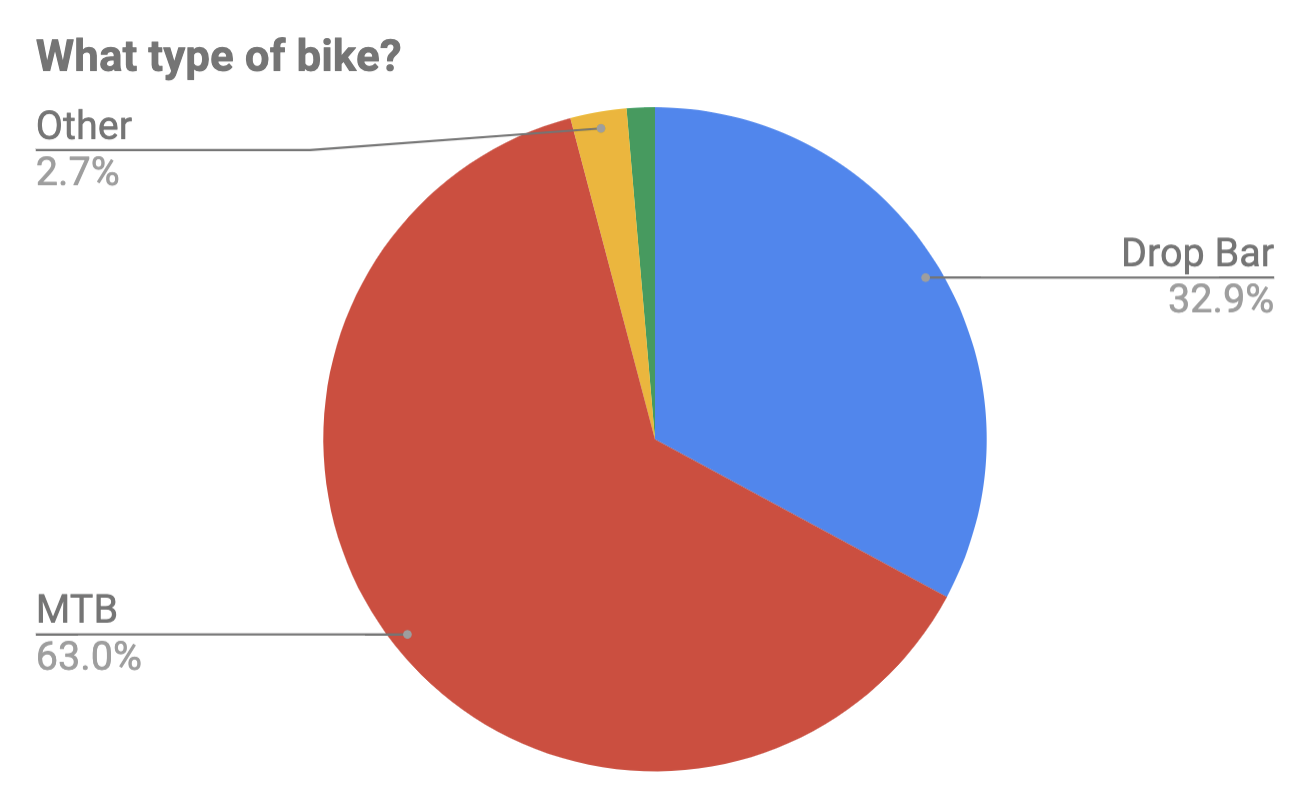
If you haven’t taken the Tour Divide Rider Survey yet, we encourage you to participate through the links below.

***Please pay close attention to the examples provided for questions requiring typed answers. If responses are not entered exactly as shown in the examples, I will need to correct them, which can skew the results. Thank you in advance!

Tour Divide Rider Survey Example

Covers: bikes, suspension, tires & wheels, drivetrain, and Components.

Covers: navigation planning, camping, logistic/travel, clothes, and more.

PARKING OPTIONS

Tour Divide Transportation Guide: Know Your Parking Options

Finding reliable parking near the Tour Divide start or end points can be a challenge. This Tour Divide Transportation Guide helps you identify secure parking options to keep your vehicle safe while you ride.

START (BANFF, AB):

  • Banff: Parking options in Banff are limited, especially near the starting area. It’s advisable to check with local accommodations or parking facilities for long-term parking options (The Town of Banff has a 72 hour rule for parked cars.  There is no mention of long term parking on their website. or anywhere else on the web.) Some riders choose to arrange a shuttle or ride-sharing to the start to avoid parking issues.

FINISH (ANTELOPE WELLS, NM):

  • Antelope Wells: This remote border crossing does not have formal parking facilities. Most riders arrange for a pickup or shuttle from nearby towns, as parking in the area is either very limited or not available. The nearest town with more robust services is Columbus, NM, where you might find better parking and shuttle options. Hachita is closest to the finish and Jeffery Sharp is your best option for help.

For both locations, it’s crucial to plan ahead and consider alternatives like arranging a pickup or shuttle service if long-term parking is a concern.

FLYING YOUR BIKE / SHIPPING

Tour Divide Transportation Guide: To Ship or Fly With Your Bike

Transporting your bike for the Tour Divide is a key part of travel planning. This Tour Divide Transportation Guide covers both shipping and flying with your bike, ensuring it arrives safely and hassle-free for your ride.

When it comes to getting your bike to the start of the Tour Divide, you have two primary options: shipping it or flying with it. Each method offers different benefits and considerations, so you can choose the one that best suits your needs.

SHIPPING YOUR BIKE

Shipping your bike offers flexibility and can be tailored to your budget and preferences. Here are the three most common options:

  • DIY Shipping: Box and ship your bike yourself. Costs start around $50-$200 for a bike packed in cardboard, though actual costs will vary based on weight, size, and destination.
  • Bike Shop: Many bike shops offer bike boxing services, typically charging around $50. Shipping costs are additional, starting around $50-$200 for a cardboard box, with final costs dependent on weight, size, and location.
  • Bike Flights: This service provides comprehensive solutions including boxes, pickup and delivery, insurance, and tracking. It’s a great option for hassle-free shipping.
  • ACA members: receive a 10% discount on cardboard boxes and bike cases through Bike Flights, among other benefits.

FLYING WITH YOUR BIKE

Flying with your bike usually incurs charges between $50 and $150, though some international airlines offer this service for free. Be sure to keep the combined dimensions (length plus width plus height) of your bike box within 62 inches to avoid additional fees. The following site has a great resource that has pricing and details for all the major airline carriers.

Like planning your resupply and water resources, researching airline policies and potential cost-saving tips can be beneficial. With numerous airlines and varying rules, doing your homework can help you avoid extra charges and ensure a smooth journey for your bike.

Shipping or Flying With Your Bike

Shipping or flying with your bike is a crucial part of the logistics for an international bikepacking trip. To ensure your bike arrives safely and without extra costs, check out our detailed Guide on Shipping or Flying with Your Bike, where we cover everything from avoiding airline fees to preventing damage and handling transit hassles.

LODGING

Tour Divide Transportation Guide: Know Where to Rest Your Head

Finding the right lodging before and after the Tour Divide can make your trip more comfortable. This Tour Divide Transportation Guide helps you explore options near the start and finish to fit your needs.

START (BANFF, AB):

  • Banff: As a popular tourist destination, Banff offers a wide range of lodging options, from hotels and motels to hostels and vacation rentals. Options close to the starting area include:
    • Banff YMCA: The unofficial base camp has rooms but reserve your’s early as space is limited and rooms go fast.  Also be aware it can be noisy.
    • Hotels: Various hotels such as the Fairmont Banff Springs and Banff Park Lodge offer convenient access to the start line.
    • Motels: More budget-friendly options are available, such as the Red Carpet Inn and the Brewster’s Mountain Lodge.
    • Hostels: For a more economical stay, consider hostels like the Banff Y Mountain Lodge.
    • Vacation Rentals: Airbnb and similar platforms offer rental homes and apartments.

    It’s advisable to book your accommodations well in advance, especially during the peak summer season.

FINISH (ANTELOPE WELLS, NM):

  • Antelope Wells: Being a very remote location, Antelope Wells has extremely limited lodging options. Most riders arrange their finish logistics with nearby towns:
    • Hachita, NM: The nearest town with accommodations. Options include:
      • The Bike Ranch: Jeffery Sharp is located a half mile from Hachita and offers a couple guest rooms, one with its own shower and toilet.  Food, beverages, internet, laundry, kitchen, dish tv, tools, used tires, tubes, etc. He also is working on converting an office trailer with water that is on the property.  Includes a toilet.  Very Private and quiet.
      • Hachita Community Center: It has changed from a donations format to $10 per person.  Outdoor camping is free.  There is a bathroom and kitchen.  Big water spigot for public use in front of building.  Lots of space for large groups.

For both start and finish, early planning is essential to secure lodging and ensure a smooth experience. If staying in Antelope Wells, it’s especially important to confirm accommodations or alternative arrangements in advance due to the area’s limited options.

More Helpful TD Resources

Everything you need to plan a bikepacking trip on the Tour Divide.
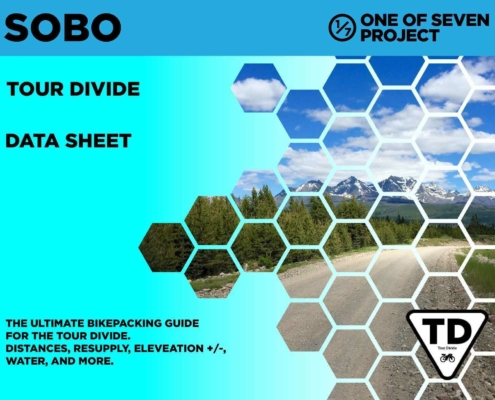
Tour Divide Planning Aids: Resupply, Mileage, and More
Checkout our full line of Tour Divide Planning Aids at our store. Choose from NOBO and SOBO / US standard and metric.

Tour Divide: My Prove Triple Crown Bikepacking Gear

  • Proven Bikepacking Gear | Tested on the Tour Divide & Triple Crown

A detailed look at what I used on the Tour Divide, what worked and what didn’t.

Tour Divide Gear: What Worked Well and What’s Even Better
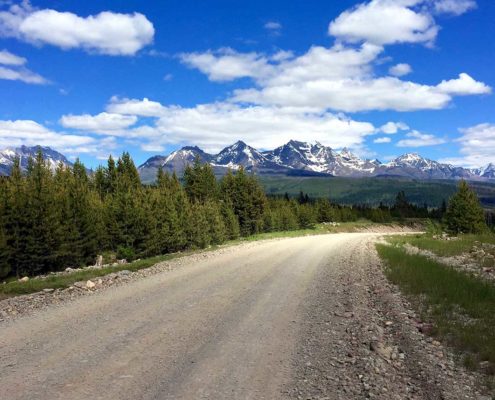
In depth look at what I would bring for gear and why, Tour Divide | What Worked Well and What’s Even Better.

Tour Divide Rider Survey: Essential Gear Insights for New Riders
Curios to know what gear other riders used to get to the finish line? Checkout our Rider Surveys to find out what works or to take the survey yourself.

Ultimate Guide to Tour Divide:

Route, Resources, and More

Checkout our bikepacking resource page for more planning help.